
What The New NASA ‘Hot Spot’ Study Tells Us About Methane Leaks
Friday August 19, 2016
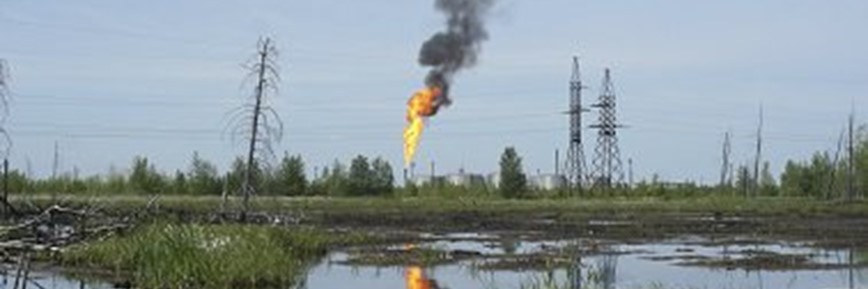
Look up in New Mexico and on most days you'll see the unmistakable blue skies that make the Southwest so unique.
But there's also something hovering over the Four Corners that a naked eye can't detect: A 2,500-square mile cloud of methane, the highest concentration of the heat-trapping pollution anywhere in the United States. The Delaware-sized hot-spot was first reported in a study  two years ago.
At the time, researchers were confident the cloud was associated with fossil fuels, but unsure of the precise sources. Was it occurring naturally from the region's coal beds or coming from a leaky oil and gas industry?
Now a team mainly funded by NASA and the National Oceanic and Atmospheric Administration has published a new paper in a top scientific journal that starts to provide answers. They find that many of the highest emitting sources are associated with the production, processing and distribution of oil and natural gas.
For this study, the authors flew over a roughly 1,200-square-mile portion of the San Juan Basin and found more than 250 high-emitting sites, including many oil and gas facilities. They also noted that a small portion of them, about 10%, were responsible for more than half of the studied emissions.
This does not come as a big surprise. In 2014, according to industry's self-reported emissions data, oil and gas sources accounted for approximately 80% or methane pollution in the San Juan Basin. Â The findings are also very consistent with results from one of EDF's methane studies in Texas' Barnett Shale, which also found disproportionate emissions from super emitters.
Finding super emitters
Since super emitters†can and do appear anywhere at any time, it is critical to be constantly on the lookout for them so they can be fixed.
The good news is because of the outsized contribution of a fraction of sites, the authors note that reducing these emissions can be done cost-effectively through improved detection practices.
That's consistent with what we know from a vast and...